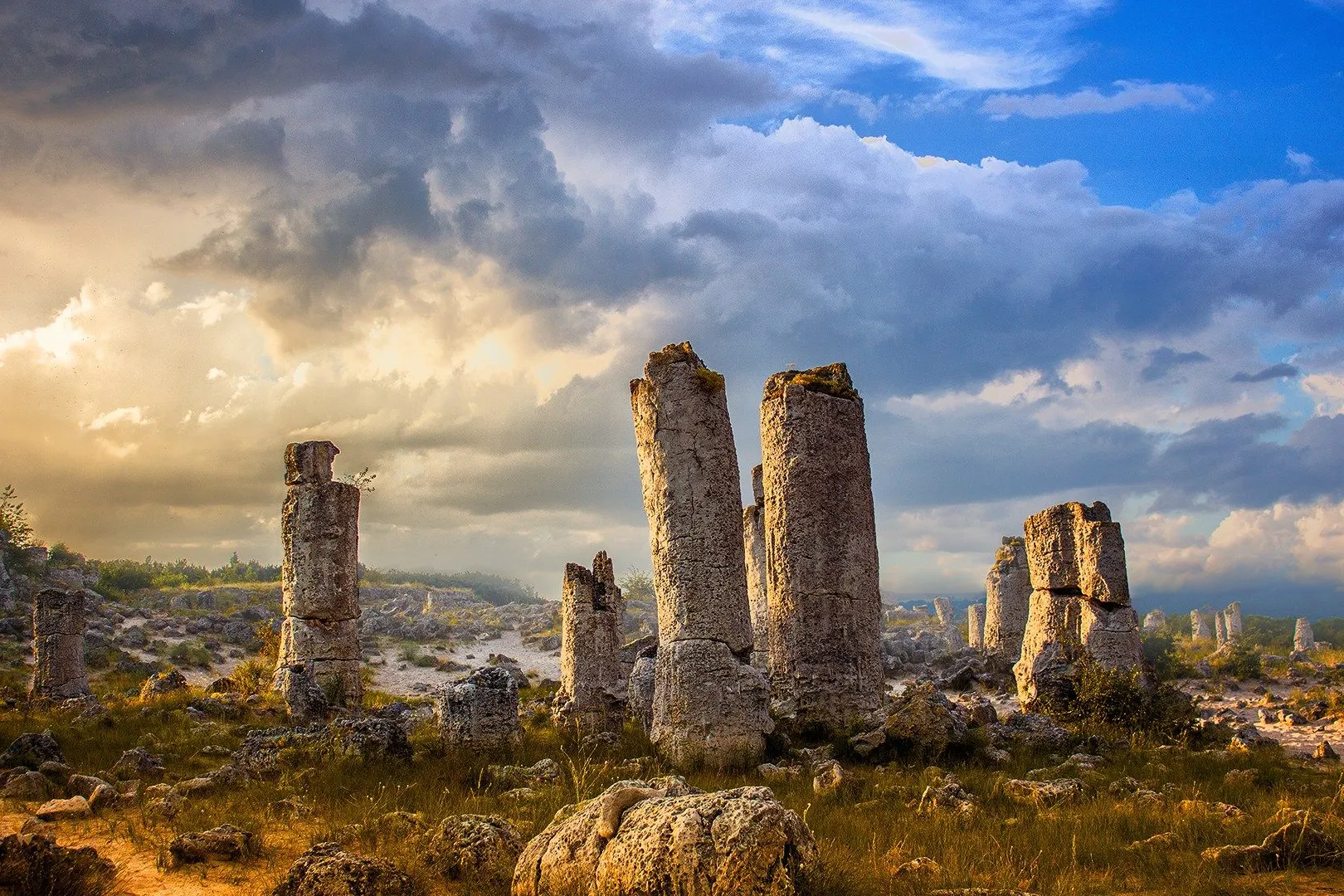
Donde las piedras cuentan historias de océanos desaparecidos y batallas entre científicos
The park is open 24 hours a day year-round, as it is an outdoor natural site. You can easily get there from Varna by car via the E70 road heading east, about 20 km from the city; there are also local buses from Varna. For more route details, check the official Bulgaria tourism website at Bulgaria Travel.
Entry to the park is free, making it accessible to all visitors. There are no admission fees, although if you hire a guide or join an organized tour, there may be additional costs. Check for updates on Bulgaria's natural parks portal.
It is recommended to allow at least 1–2 hours to explore the main rock formations on foot, depending on whether you take a short visit or a longer walk. It is a compact site, ideal for a relaxed morning or late-afternoon visit.
This park is famous for its cylindrical rock formations up to 10 meters high, formed about 50 million years ago through geological processes involving sand and fossil shells, similar to a petrified desert. Culturally, it has inspired local legends and has been protected since 1939 as a unique natural phenomenon in Europe.
The best time is during summer (June to September), when the weather is warm and sunny, ideal for photos at sunrise or sunset that highlight the shadows on the rocks. Avoid winter because of the cold and possible strong winds.
The main access is via sandy and dirt paths, which can be challenging for wheelchairs, although there are flat areas near the entrance. It is recommended to contact the Varna visitor center (phone: +359 52 602 490) for adapted options or guided tours.
Nearby, about 15–20 km away, you can visit Golden Sands Beach to relax or the Varna Archaeological Museum, with ancient Thracian treasures. Another option is Aladzha Monastery, carved into a cave, ideal to combine into a day of sightseeing.
Bring water, sunscreen, and comfortable shoes for walking on sandy ground; do not forget your camera to capture the unique formations. Visit early to avoid the heat and respect the signs so as not to damage the protected natural environment.
¿Prefieres escuchar en español?
🇪🇸 Escucha la audioguía de Pobiti Kamani en español