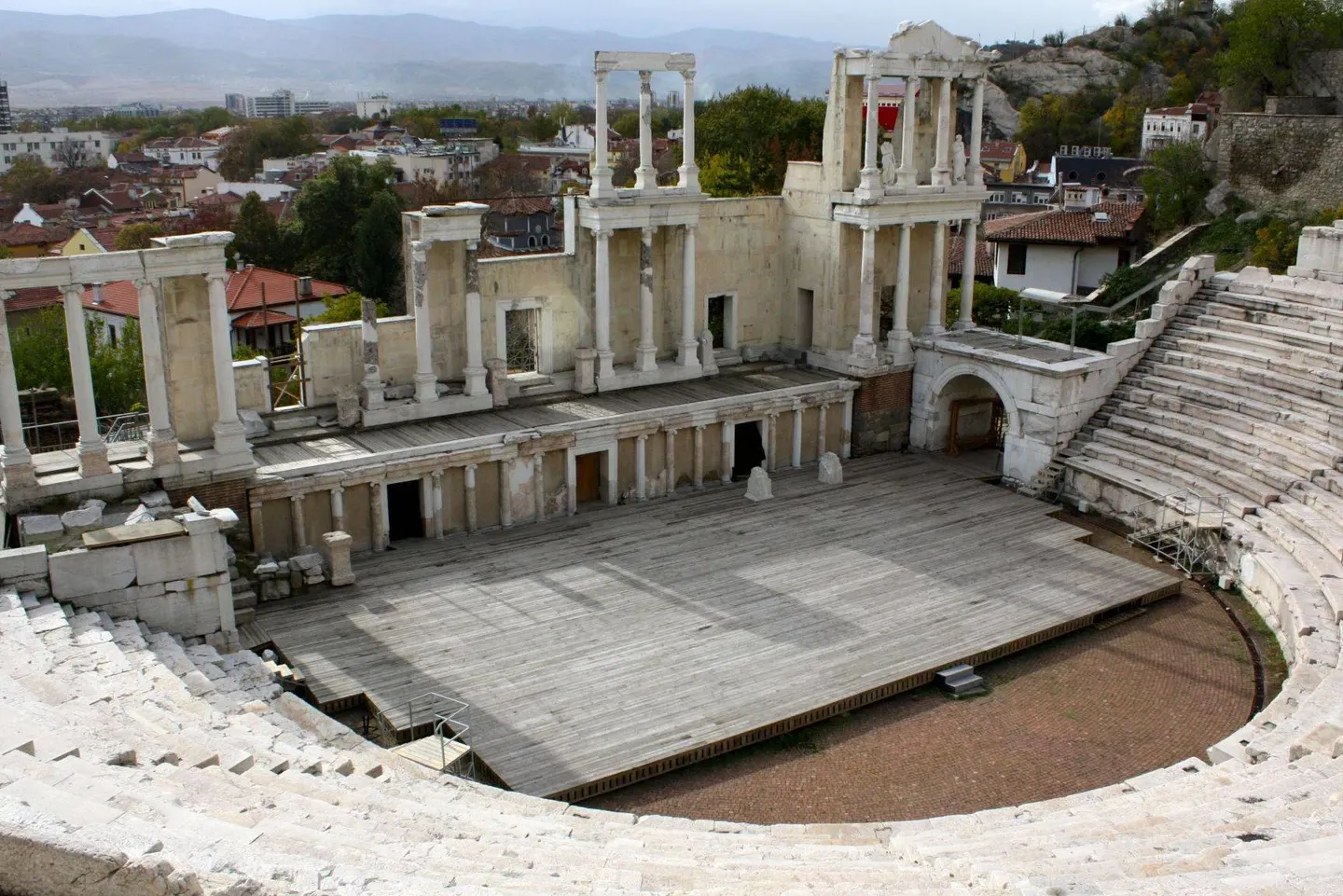
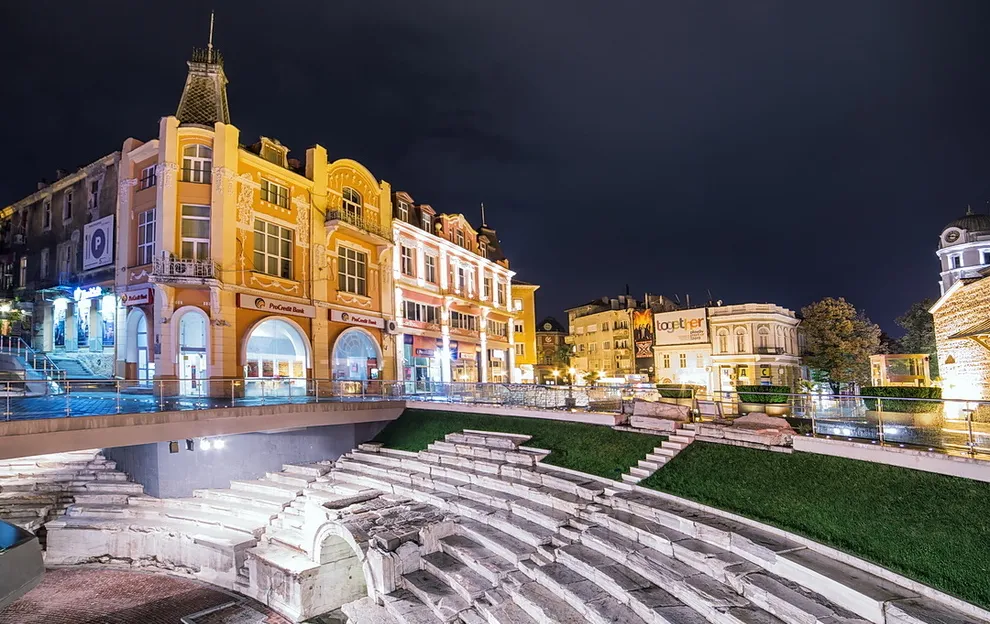
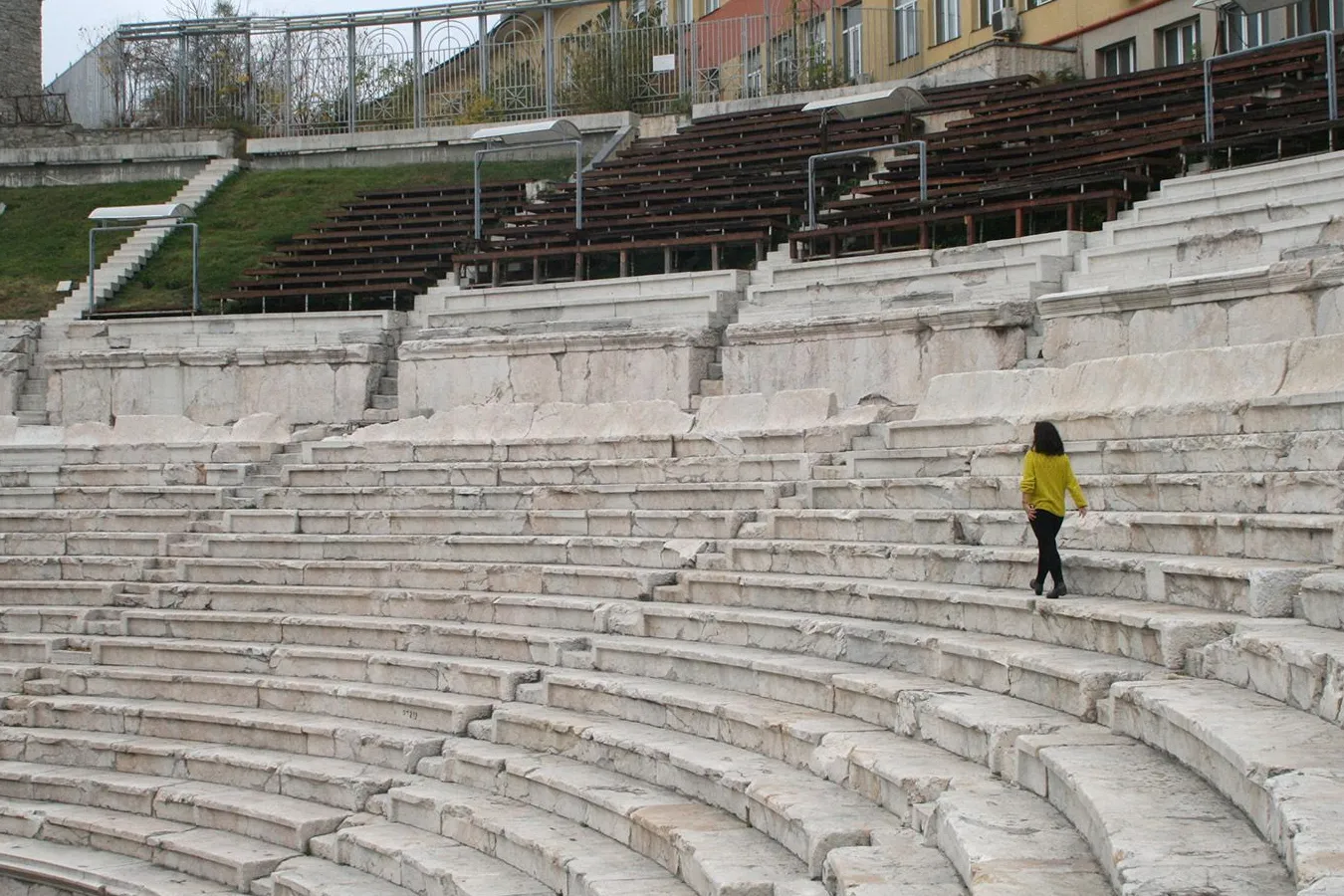
Built in the 2nd century during the reign of Emperor Hadrian, this stadium could hold up to 30,000 spectators and stands in the heart of modern central Plovdiv.
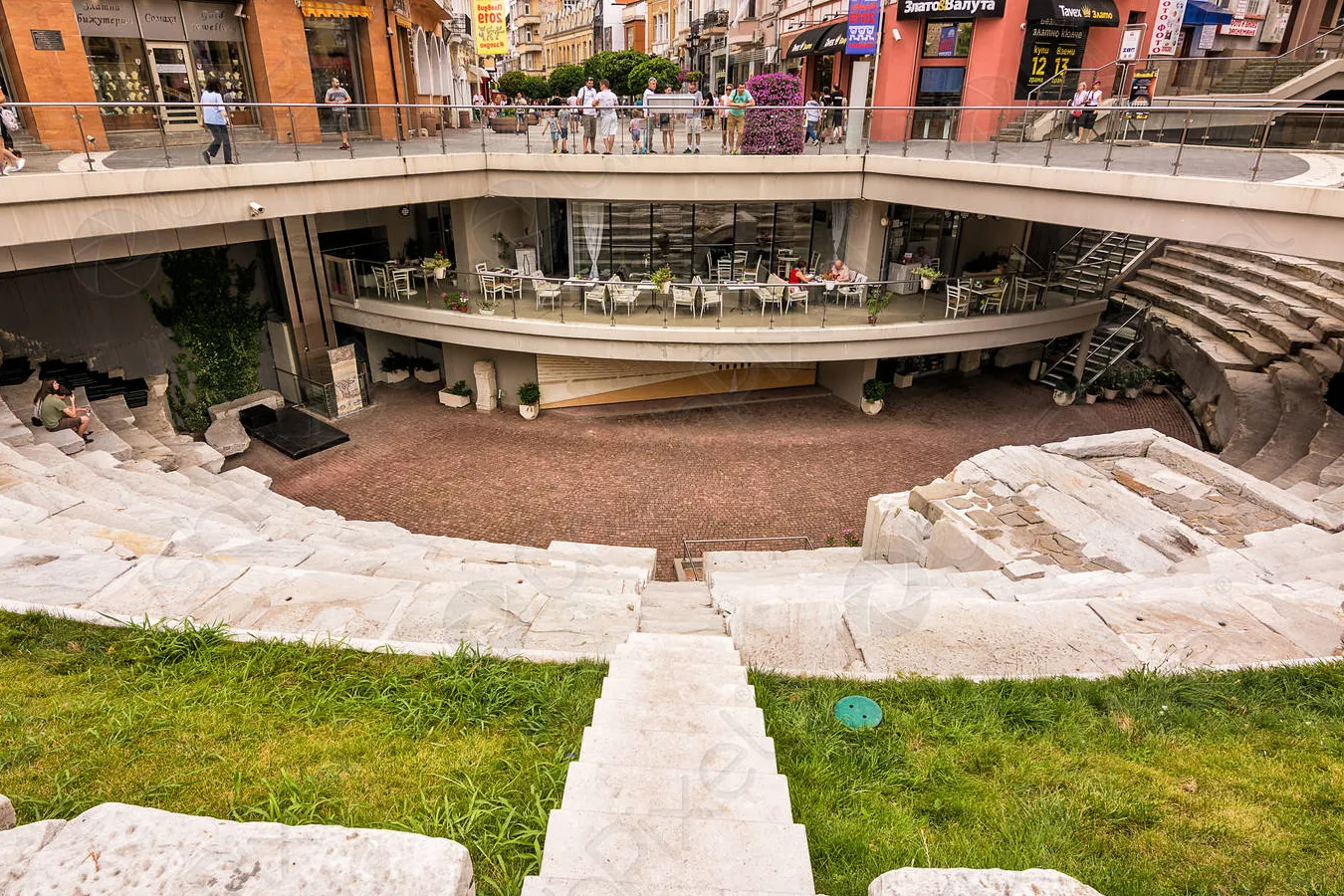
The Roman Stadium of Plovdiv is an open-air ruin integrated into Plovdiv’s urban landscape, so it can be visited 24 hours a day. However, there is an underground exhibition with specific opening hours. At present, due to renovations, this exhibition is closed to the public. You can check Plovdiv’s official website for future updates on its reopening: Official Plovdiv news.
The main part of the Roman Stadium is an open area and is completely free to visit, as it is integrated into Plovdiv’s main street, Knyaz Alexander I Street. The underground exhibition, when open, does have an admission fee. The price used to be 5 BGN for adults, with discounts for students and seniors. I recommend checking the official website of the Plovdiv Archaeological Museum, which manages the site, for up-to-date pricing information: Plovdiv Archaeological Museum.
For the visible exterior part of the Roman Stadium, about 15 to 30 minutes is enough to admire the remains and take some photos. If the underground exhibition reopens in the future, I would add another 30 to 45 minutes to explore the ruins more deeply and understand the history. In total, no more than an hour if the exhibition is open.
This impressive stadium was built in the 2nd century AD under the rule of Emperor Hadrian and was one of the best-preserved Roman stadiums in the world. It hosted chariot races, athletic competitions, and gladiatorial contests, serving as a vital center of public life in ancient Philippopolis, now Plovdiv. It is a testament to the grandeur and Roman influence in the Balkans.
Since it is an open-air structure, any time is good. However, to avoid crowds and the summer heat, especially from June to August, I recommend visiting early in the morning or late in the afternoon. The spring months, April and May, and the autumn months, September and October, offer more pleasant weather and fewer tourists.
The part of the Roman Stadium visible from the main street is quite accessible, as it is at street level or has gentle ramps around the square. However, the underground exhibition, when open, used to have stairs, which could make access difficult for wheelchair users or people with reduced mobility. It is always advisable to contact the Plovdiv Archaeological Museum in advance for the latest accessibility information: [email protected].
You are in the heart of both ancient and modern Plovdiv. Just a short walk away, you can explore the Old Town with its Bulgarian Revival houses, the magnificent Roman Theatre of Plovdiv, Dzhumaya Mosque, and Knyaz Alexander I Street, full of shops and cafés. Everything is easily accessible on foot.
My advice is to take your time observing the archaeological details from different angles. Even if the underground exhibition is closed, the visible part is impressive and lets you imagine the majesty of the site. Do not forget to look at the information panels around it, which offer interesting facts about its history. And of course, take advantage of being on the main street to enjoy the atmosphere and have a coffee nearby.
¿Prefieres escuchar en español?
🇪🇸 Escucha la audioguía de the Roman Stadium of Plovdiv en español