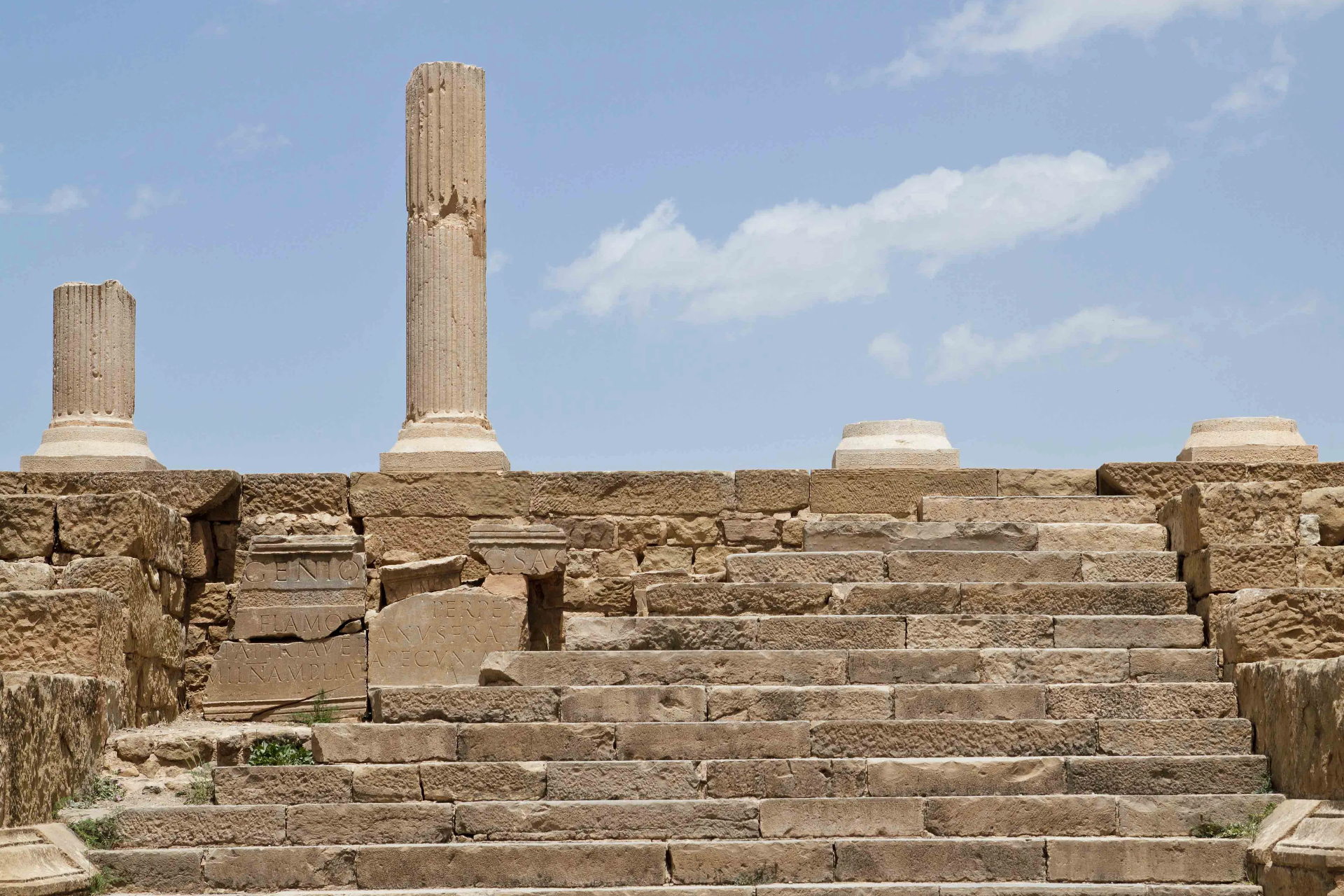
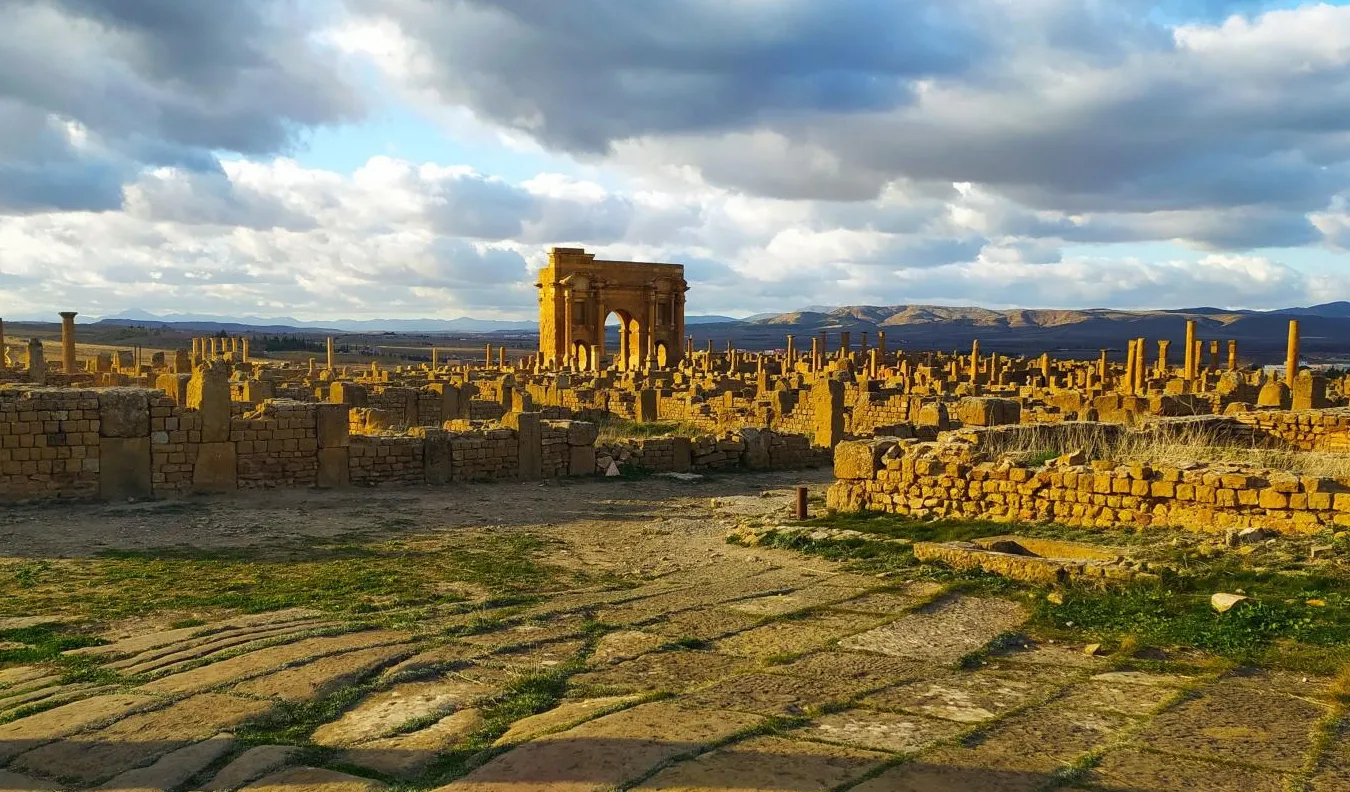
A fascinating journey through the Roman ruins of Timgad, an ancient colonial city that reveals the grandeur of the Roman Empire in Africa.
The Timgad Ruins are generally open from 9:00 AM to 5:00 PM, although hours may vary slightly depending on the season. It is advisable to check current opening times before your visit, as advance reservations are not usually required for general admission. We recommend consulting a reliable source such as the UNESCO page for updated information.
Admission to the Timgad Ruins is not free; there is a fee that may vary slightly for international visitors. It is generally an affordable charge intended to help maintain the site. Unfortunately, there is no centralized official website to check updated prices, so we recommend asking directly upon arrival or at your local accommodation for the most recent information.
To explore the Timgad Ruins and appreciate their scale and detail, it is recommended to allow at least 2 to 3 hours. If you are a history or archaeology enthusiast, you could easily spend half a day discovering every corner and the information available in the local museum, if it is open at the time of your visit.
Timgad, known as Thamugadi, is of great historical importance. It was a Roman military colony founded by Emperor Trajan around AD 100, and its remarkable preservation makes it one of the best examples of a Roman city planned ex nihilo, from the ground up. Its grid layout and the preservation of structures such as Trajan's Arch, the theater, and the baths offer an incredible insight into Roman life in North Africa. It is a UNESCO World Heritage Site, and you can learn more at the UNESCO listing.
The best time to visit Timgad is during spring, from March to May, or autumn, from September to November, when temperatures are milder and more pleasant for walking. During the summer months, the heat can be very intense. As for the time of day, we recommend going early in the morning to avoid the strongest sun and possible crowds, or late in the afternoon to enjoy warmer light for photography.
Since Timgad is a large archaeological site with uneven ground, stone-paved streets, and steps, accessibility for people with reduced mobility may be limited in certain areas. Some sections may be manageable with a wheelchair, but it is recommended to contact the site administration, if you can find an official local number, since there is no centralized website for these details, or a local tour operator to obtain specific information about accessibility in different areas and whether assistance is available.
Near Timgad, you can explore other historical wonders. About a two-hour drive away are the impressive Roman ruins of Djemila, another UNESCO World Heritage Site that is well worth visiting if you have time. Also, the city of Batna, while not a major tourist destination in itself, serves as a base and starting point for expeditions into the Aurès region.
Of course. Wear comfortable walking shoes, a hat, and sunscreen, as most of the visit is outdoors and under the sun. It is a good idea to bring enough water, especially in the warmer months, since options for buying drinks at the site are limited. Consider hiring a local guide if you want to delve deeper into the history; although guides are not always available on site, you can ask upon arrival or look for tour operators in advance for a richer experience. And do not forget your camera to capture the majesty of this place.
¿Prefieres escuchar en español?
🇪🇸 Escucha la audioguía de Timgad Ruins en español