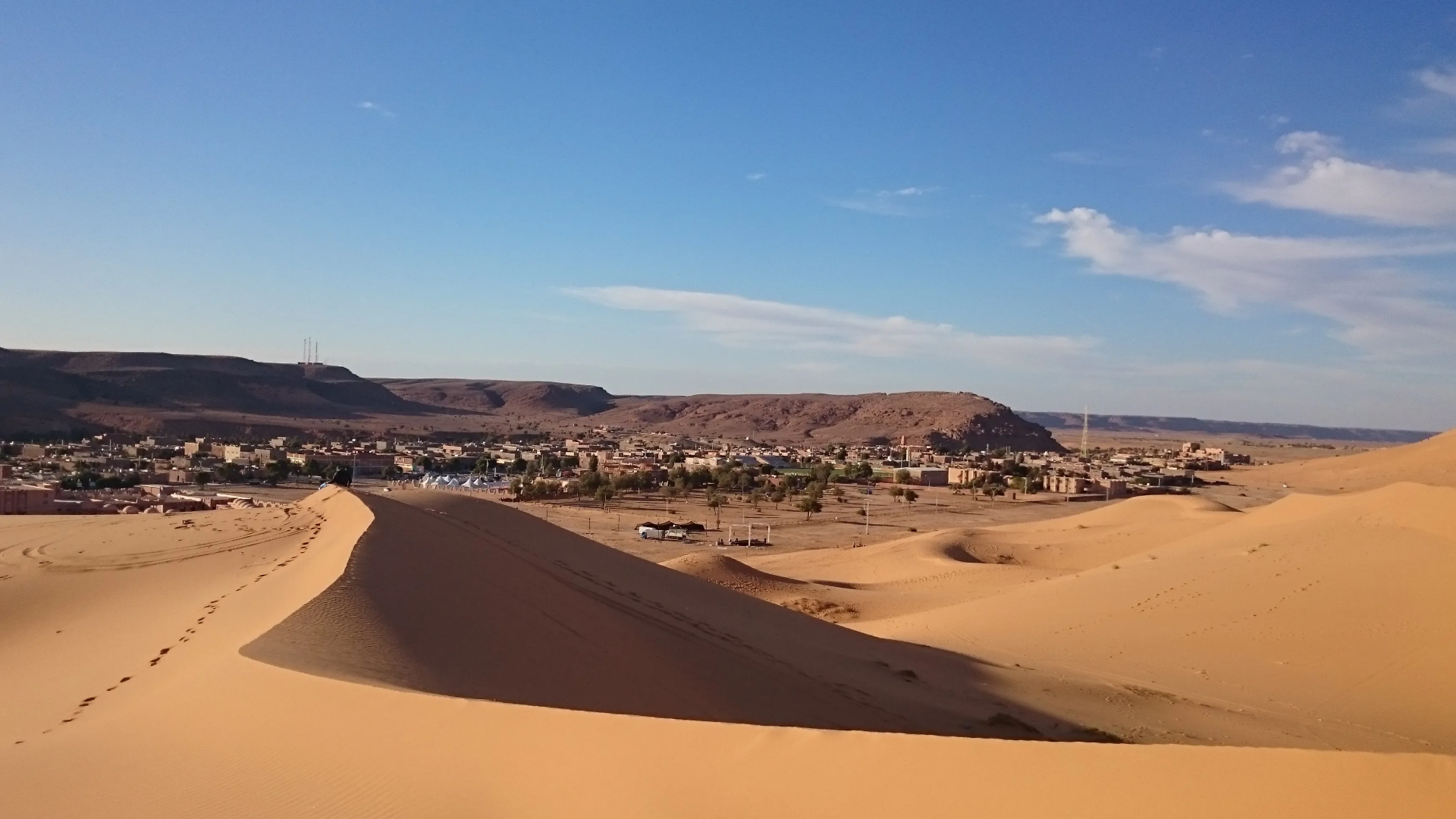
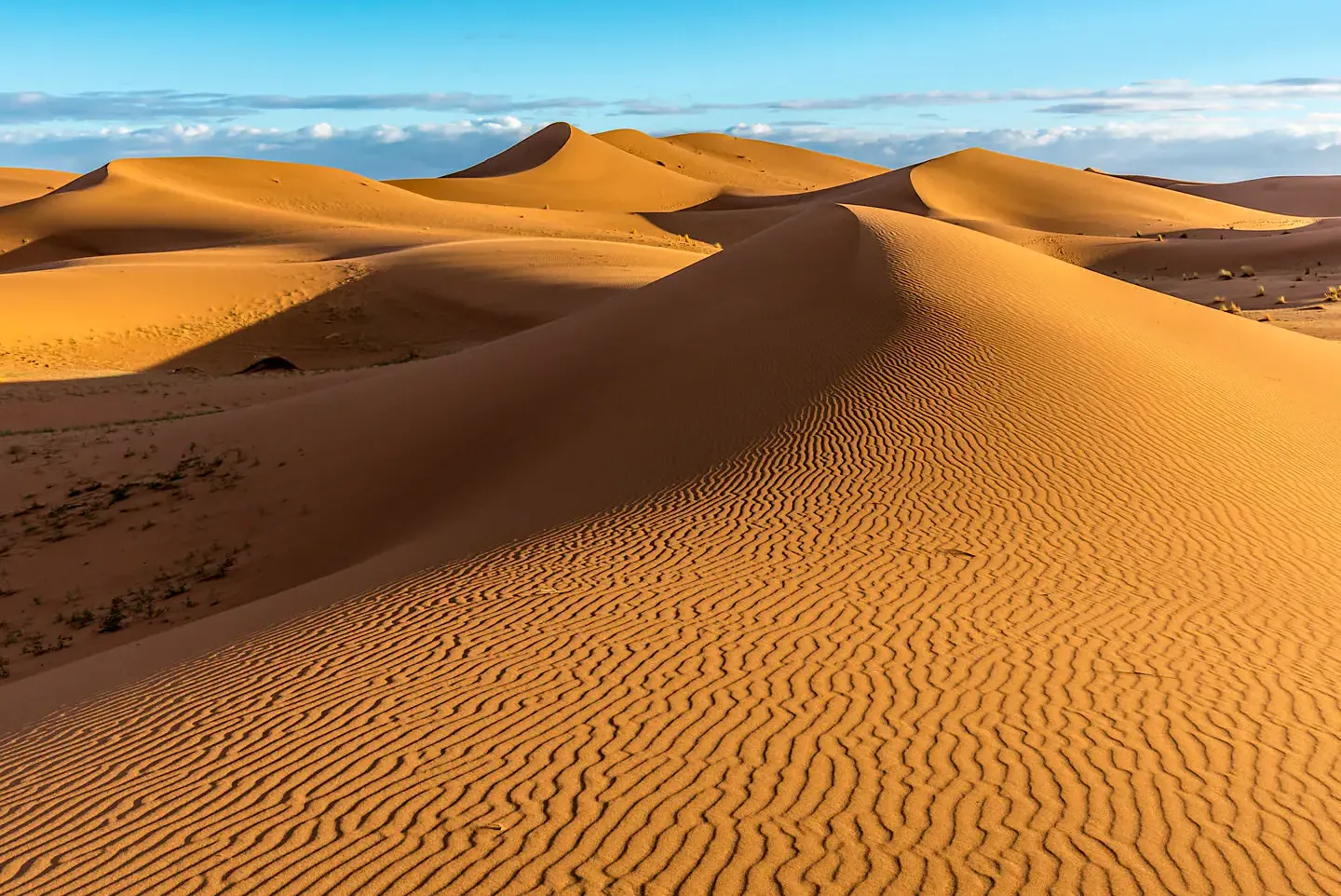
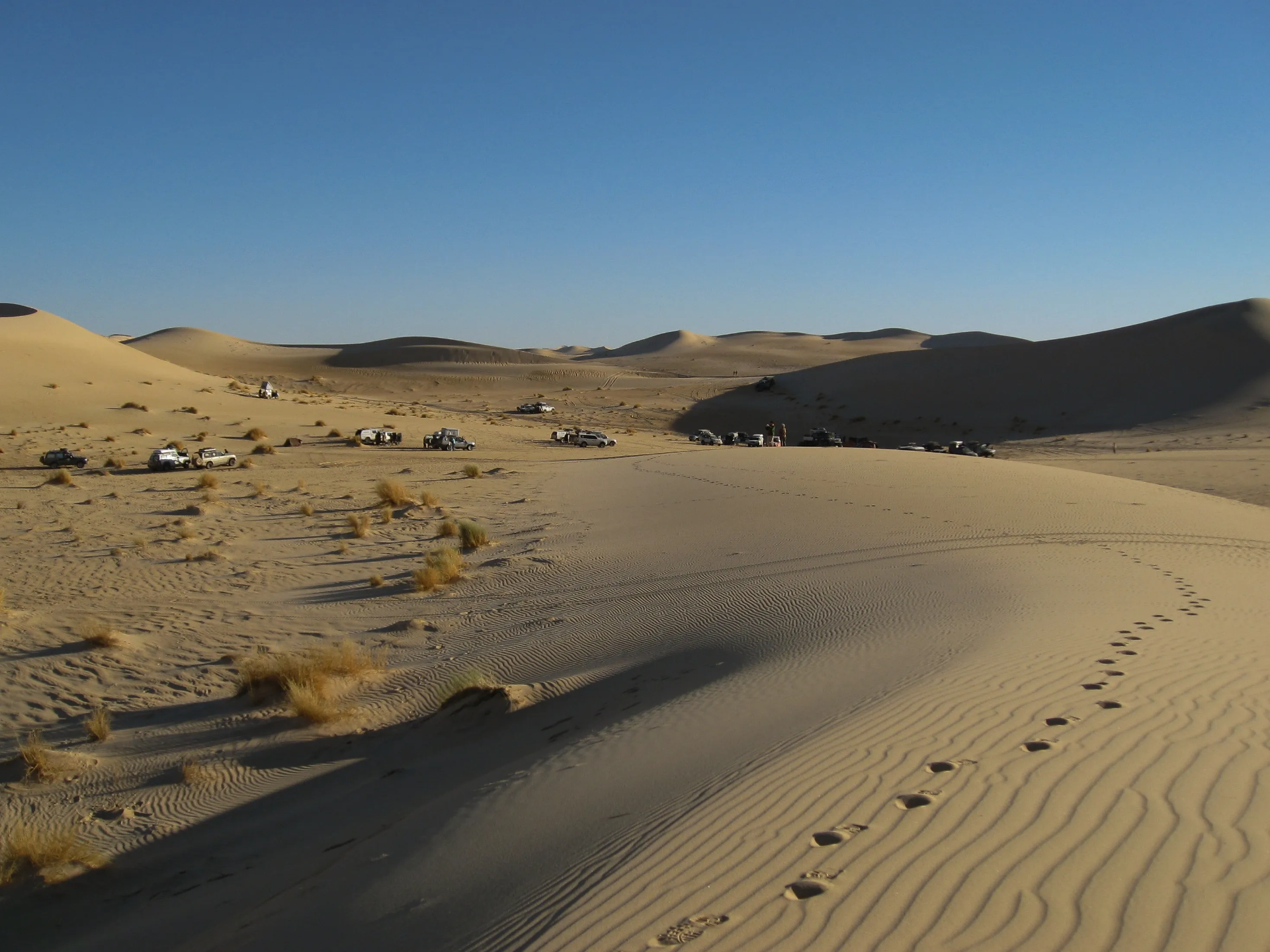
Imponentes dunas de arena dorada en el corazón del desierto argelino, esculpidas por el viento durante milenios, que crean un paisaje ondulante y mesmerizante único en el mundo.
The Sahara Dunes do not have formal opening or closing hours like a museum, as they are a natural formation. Access is open. To get there, the most common option is to book a guided tour from Bordj Badji Mokhtar, which includes transport in 4x4 vehicles. It is crucial to go with local guides because of the complexity of the terrain and for safety reasons.
No, access to the Sahara Dunes themselves is free. However, you should consider the costs associated with transportation and hiring a local guide, which are essential for a safe and rewarding visit. These expenses vary depending on the tour operator and the length of the tour.
Although you can spend a few hours exploring, for a full experience that includes activities such as sandboarding, sunset or sunrise photography, and even some hiking, it is recommended to plan at least half a day or, ideally, a full-day visit with the option of camping. Many tours offer overnight stays so you can experience the magic of the desert under the stars.
The Sahara Dunes, in this remote region of Algeria, are part of one of the largest and oldest deserts in the world, home to nomadic Tuareg populations for thousands of years. Their importance lies in being a unique ecosystem with biodiversity adapted to the extreme climate, and in their role as a traditional caravan route. These dunes do not have a specific monumental historical significance, but they are part of an ancient natural and cultural heritage, standing as a testament to the vastness and beauty of the desert.
The best time to visit the Sahara Dunes is during the cooler months, from October to April, when temperatures are more pleasant. During these months, the best time of day is early in the morning or at sunset, when the light is ideal for photography, the heat is less intense, and you can enjoy spectacular sunrises or sunsets over the sand. Avoid the middle hours of the day in summer.
Because of the nature of the terrain (deep sand and uneven dunes) and the need for 4x4 vehicles for access, the Sahara Dunes present significant challenges for people with reduced mobility or wheelchair users. Accessibility is very limited. If you have special needs, we recommend contacting specialized local tour operators who can advise on specific adaptations or viable alternatives.
Since Bordj Badji Mokhtar is a remote area and the dunes are the main attraction, nearby activities are usually related to desert culture and local life. You can explore the town of Bordj Badji Mokhtar itself to experience its frontier atmosphere, visit local markets, or interact with the Tuareg population to learn about their traditions. Many tours combine a visit to the dunes with cultural experiences or overnight stays in Berber camps.
Of course! Bring plenty of water, sunscreen, sunglasses, and a hat to protect yourself from the sun and sand. Wear light clothing that still covers your skin from the sun. Hiring an experienced local guide is essential for your safety and to deepen your understanding of the area. Consider bringing a power bank to charge your devices, as there will be no outlets. And above all, get ready for the adventure and majesty of this incredible landscape!
¿Prefieres escuchar en español?
🇪🇸 Escucha la audioguía de the Sahara Dunes en español