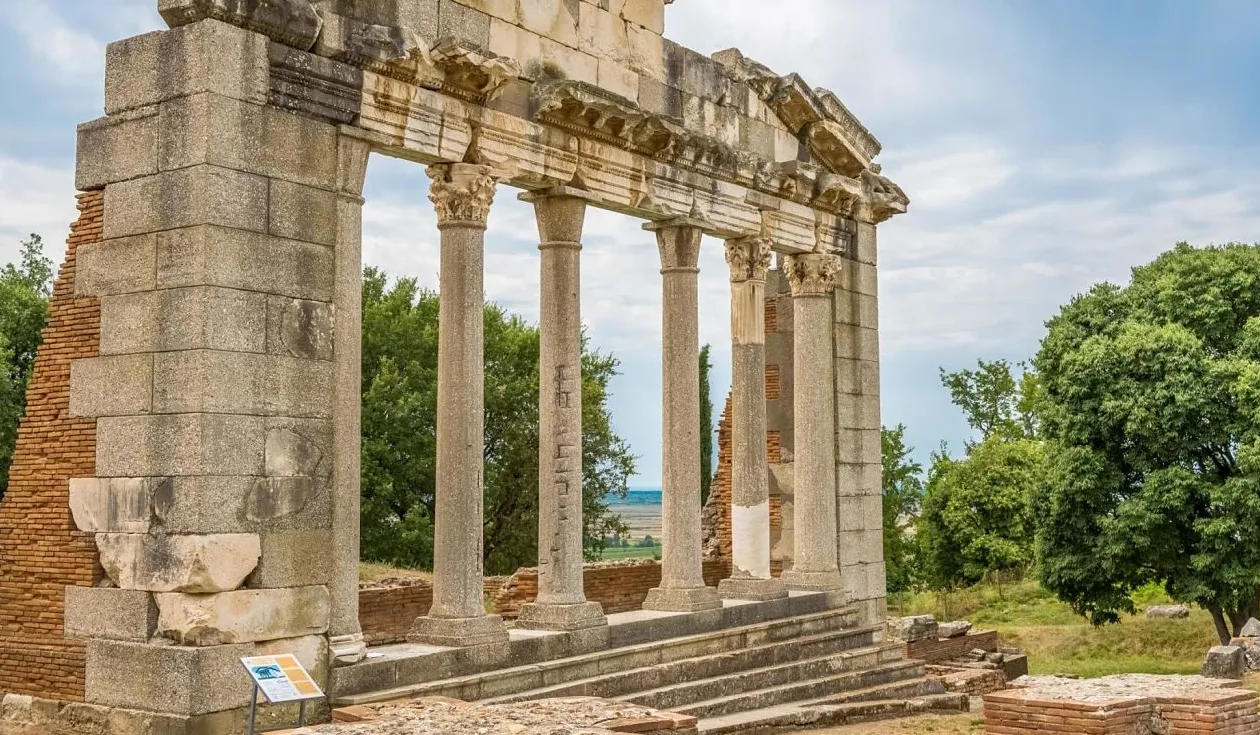
Donde un joven Octavio planeó su venganza y las piedras revelan guerras de hace 24 siglos
Apollonia Archaeological Park generally opens from 9:00 AM to 6:00 PM, although I recommend checking the exact hours on the official website before your visit, as they may vary by season. It is located near Fier, and the most common way to get there is by car or taxi from nearby cities, since direct public transport is limited. You can find more details on how to get there on Google Maps: Apollonia Archaeological Park on Google Maps.
Admission to Apollonia Archaeological Park is not free. There is an entry fee for visitors. The price is usually around 400 to 600 Albanian lek, but I suggest checking the exact rate at the ticket office when you arrive. Sometimes discounts are available for students or groups, so feel free to ask if you qualify.
For a complete and detailed visit that allows you to appreciate all the points of interest, including the museum inside the monastery, I would recommend setting aside at least 2 to 3 hours. If you enjoy taking photos or simply soaking up the atmosphere, you could easily spend an entire afternoon here. Inside the site, you will find signs with information to help you organize your route.
Apollonia was one of the most important cities of the ancient Mediterranean, founded by Greek colonists in the 6th century BC. Its strategic location on the Adriatic-Aegean trade route made it a prosperous economic and cultural center. It was an important intellectual hub with a famous school of philosophy, where even Emperor Augustus studied. Its former splendor is reflected in the impressive architectural remains you can still admire today, such as the Odeon, the Bouleuterion, and the temples.
The best time of year to visit Apollonia is during spring (April to June) or autumn (September to October), when the weather is milder and more pleasant, avoiding the intense summer heat. As for the best time of day, I suggest going early in the morning or late in the afternoon to avoid the crowds and enjoy softer light for photography. At those times, the heat is also less intense, which makes walking around the site more comfortable during summer.
As an ancient open-air archaeological site, Apollonia Archaeological Park presents accessibility challenges. Much of the terrain is uneven, with dirt paths and stones, which can make movement difficult for wheelchair users or people with reduced mobility. While some areas may be accessible with assistance, I recommend contacting the site staff directly or the local tourist office for specific information about available facilities and the most accessible routes. You can find more general information in travel guides like this one: National Geographic: Route Through Albania.
Yes, there are several interesting places near Apollonia. A short distance away is the city of Fier, which offers accommodation and restaurants. You can also visit Ardenica Monastery, a beautiful medieval Orthodox monastery with impressive frescoes. For nature lovers, Karavasta Lagoon, one of the largest lagoons in the Mediterranean and home to migratory birds, is not far away and is perfect for a day trip to enjoy the wildlife. You can find more information about activities in the region here: Things to Do in Albania (TripAdvisor).
To make the most of your visit, I recommend wearing comfortable walking shoes, as the terrain is uneven. Be sure to bring water, especially in the warmer months, as well as sunscreen and a hat, since there is little shade. Consider hiring a local guide if you want to explore the history in greater depth. Don’t forget your camera—the views are spectacular! And finally, make time for the museum as well, which houses many interesting artifacts found at the site.
¿Prefieres escuchar en español?
🇪🇸 Escucha la audioguía de Apollonia Archaeological Park en español